


ADU vs addition · Orange County
Orange County, CaliforniaAn ADU is a second home. An addition is more of the one you have.
A second home, or more of this one.
Avorino designs, permits and builds both across 37 Orange County cities under California General-B License #1107538.
The short answer
Not style. Law.
The difference between an ADU and a home addition is not style, it is law. An ADU is a separate dwelling, so California reviews it ministerially on a 60-day clock, caps the setbacks a city may require at four feet, exempts it from impact fees at 750 square feet or less, and lets you rent it separately from the house. An addition is part of your house, so it gets none of that — and it puts the space inside your own front door, which is sometimes exactly what you want.
ADU vs home addition
The eight differences that decide it.
Every row below is a rule, not an opinion. The ADU column quotes the Government Code section that creates the difference; the addition column states what applies when there is no such section, which is the ordinary zoning path.

| What differs | ADU | Home addition |
|---|---|---|
| What it is, legally | A separate dwelling unit on the same lot, with its own kitchen, bath and entrance. | More of the same house. It shares the address, the kitchen and the meter. |
| How the city reviews it | Ministerially. §66317(a)(1) says the application “shall be considered and approved ministerially without discretionary review or a hearing.” | Through the ordinary zoning path, with whatever discretionary review the zone and the overlay require. |
| Is there a clock | Yes. 60 days from a completed application, and if the agency has not acted “the application shall be deemed approved” (§66317(a)(3)). | No statutory clock. Plan check takes what the city's queue takes. |
| Setbacks | A city may require no more than four feet at the side and rear for a new unit (§66314(d)(7)). | The underlying zone's setbacks apply in full. |
| Impact fees | None on a unit of 750 square feet of interior livable space or less; above that they are charged in proportion to the primary dwelling (§66311.5(c)(1)). | Ordinary city and district fees, by the city's own schedule. |
| Can you rent it out | Yes, separately from the house — §66314(d)(1). A city may require terms of 30 days or longer (§66315). | Not as a separate home. It is part of the house you live in. |
| Can you sell it separately | No. §66314(d)(1) allows separate rental but not separate sale, subject to the exceptions elsewhere in the chapter. | No — it is the same property. |
| Does an owner have to live there | Not for a standard ADU: §66315 bars a local agency from imposing “an owner-occupant requirement.” | Not applicable. |
Statute text from the California Government Code, quoted with its section. The size, band and schedule figures below are Avorino’s published Orange County ranges.
By the numbers
The same eight differences, by the numbers.
Either ADU can be rented separately from the house under §66314(d)(1); an addition cannot, because it is not a separate dwelling. The rest follows from that one distinction.
The lot usually settles it before preference does: how much clear side and rear yard is left after the four-foot setbacks, where the sewer lateral and the panel sit, and what the city’s lot-coverage limit leaves you. The Orange County ADU permit index names how each of the 37 cities takes the application.
ADU
- The city's clock, from a completed application
- 60 days
- Then deemed approved · §66317(a)(3)
- The most a city may require, side and rear
- 4 ft
- §66314(d)(7)
- Impact fees at 750 sq ft of interior livable space or less
- No fee
- §66311.5(c)(1)
- Rented separately from the house
- Yes
- §66314(d)(1), terms of 30 days or longer · §66315
Home addition
- No statutory clock
- None
- Plan check takes what the city's queue takes
- The underlying zone's setbacks apply in full
- The zone's
- City and district fees
- Ordinary
- By the city's own schedule
- Not as a separate home
- No
- It is part of the house you live in
Choosing between them (3)
Which one your lot and your plan point to.
Build the detached ADU or an attached ADU when the space has to work as a home of its own; build an addition when the problem is inside the house.

01 Detached ADU
When the space has to work as a home on its own: a parent who needs a front door, a tenant, a long-term guest.
- $245K – $440K+
- 500 – 1,200 sqft
- 5–8+ mo

02 Attached ADU
When the yard is tight but a wall of the house can carry a second unit.
- $200K – $350K+
- 450 – 1,000 sqft

03 Home addition
When the problem is inside the house: one more bedroom, a primary suite, a kitchen that has run out of room. Its published cost range is on the additions page.
- Priced per square foot against the existing structure
- Not rentable as a separate home
Built by Avorino · Brea, California
A kitchen of its own.
An ADU carries its own kitchen, bath and entrance. The finished kitchen of a garage-conversion ADU in Brea, filmed as built.
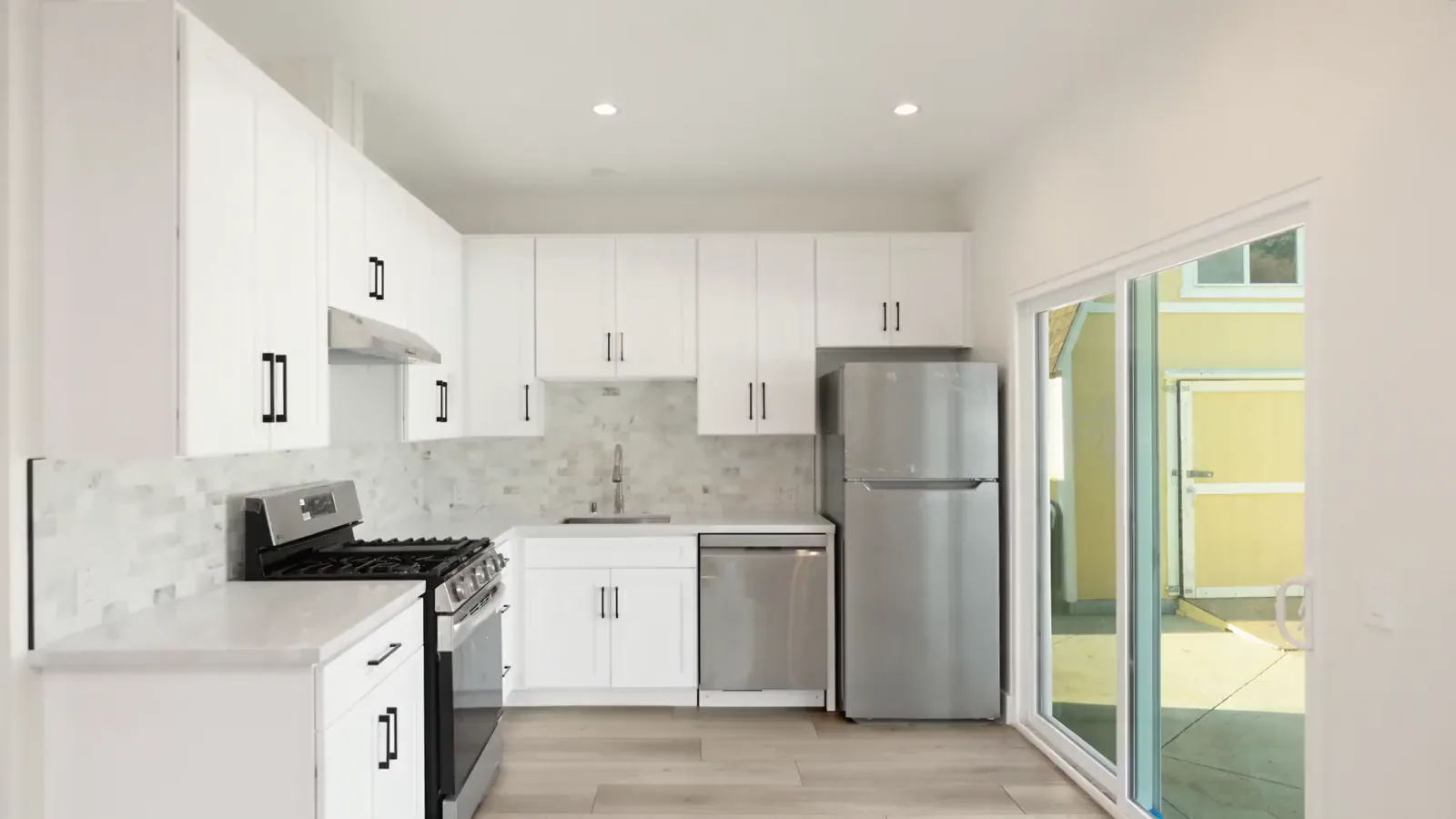
- 01 / 03The kitchenWhite shaker cabinets over a marble-look backsplash.
- 02 / 03StainlessA gas range, a dishwasher and a stainless refrigerator.
- 03 / 03To the yardA glass slider opens the kitchen to the yard.
Built by Avorino
Two ADUs we built.
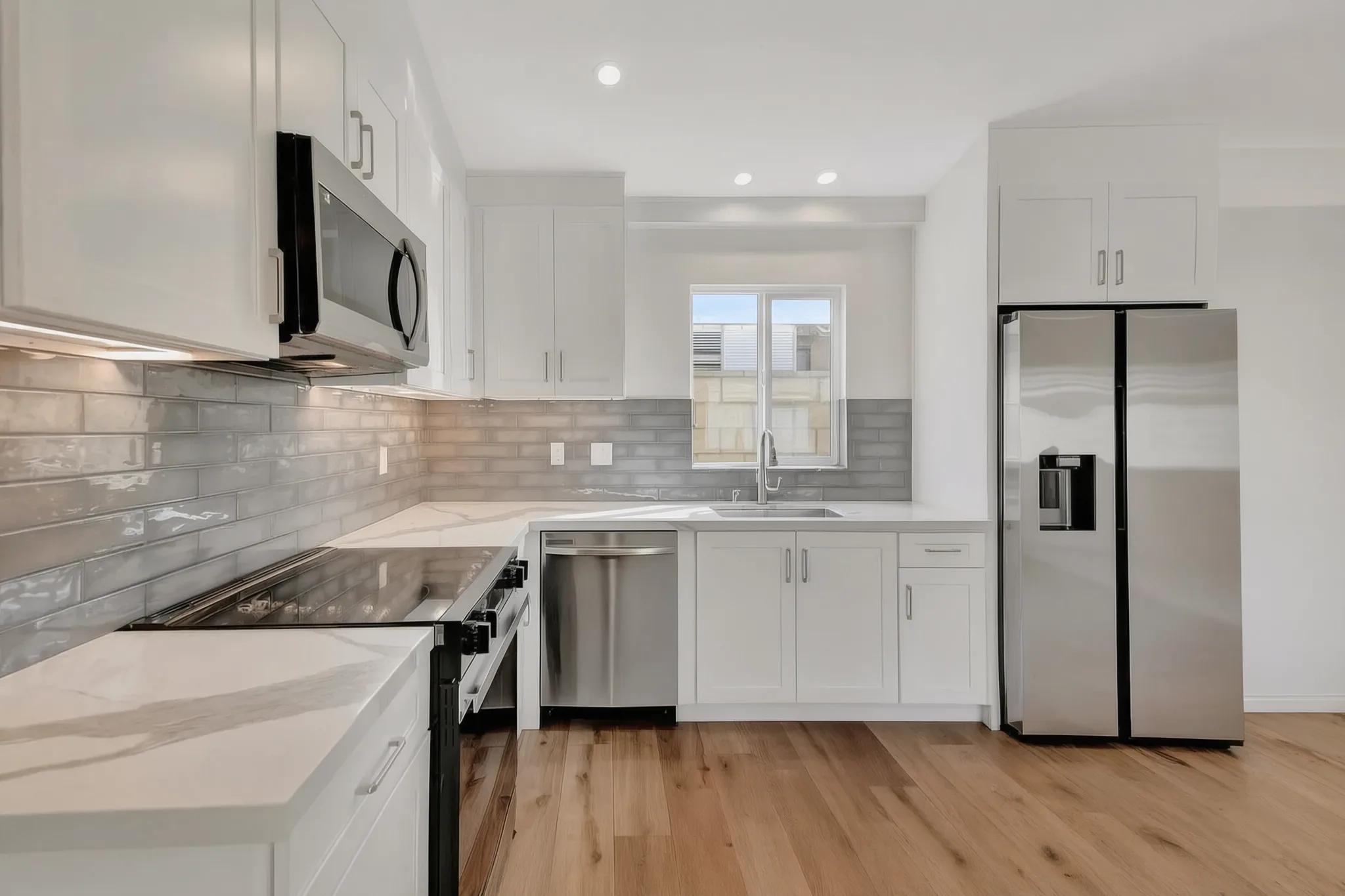
01Santa Ana
Detached ADU in Santa Ana
Size: approx. 800 sq ft · Layout: approx. 2 bed · 2 bath · Stories: Single-story · Build: Ground-up · Flat lot
See the project
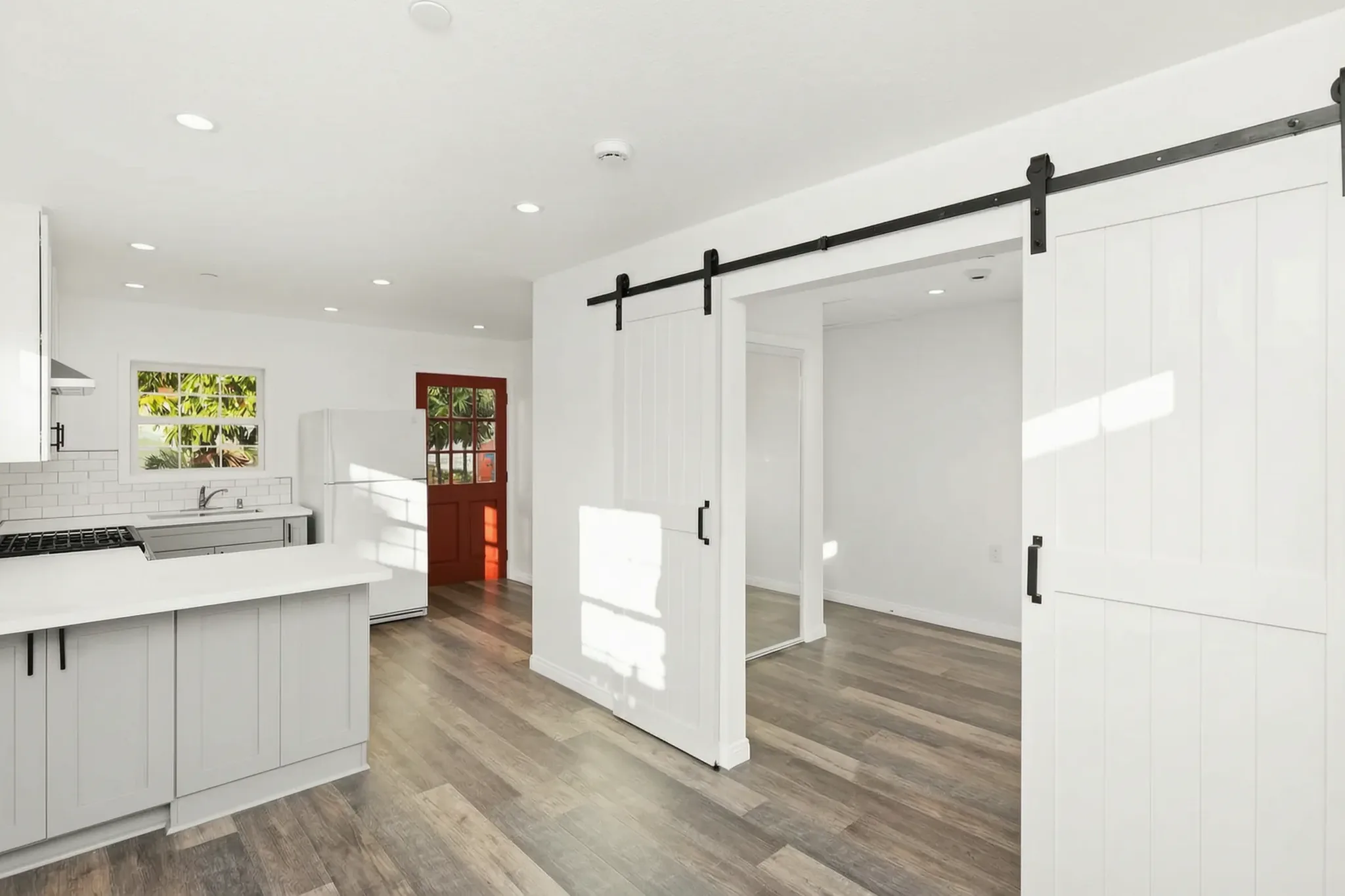
02Orange
Barn-Door Attached ADU
Size: approx. 550 sq ft · Layout: approx. 1 bed · 1 bath · Stories: Single-story · Build: Attached
See the project
Sizes and room counts marked approx. are estimates from plans and photos. More finished work sits in the Avorino portfolio.
01 / Choosing
Is an ADU or a home addition better?
Neither is better in the abstract; they answer different questions. An addition makes the house you live in bigger, and it is the right call when you need another bedroom or a larger kitchen inside your own front door. An ADU is a second, separate home on the same lot, and it is the right call when the space needs its own entrance, its own kitchen and the option of rent. The legal differences follow from that one distinction: an ADU is reviewed ministerially on a 60-day clock under Government Code §66317, gets four-foot side and rear setbacks under §66314(d)(7), pays no impact fees at 750 square feet or less under §66311.5(c)(1), and may be rented separately under §66314(d)(1). An addition gets none of those, because it is not a separate dwelling.
Can I do both?
Often, yes — they are separate permits and separate scopes, and state law does not make one exclude the other. What decides it is the lot: how much clear side and rear yard is left after the four-foot setbacks, what the city's lot-coverage limit leaves you, and where the sewer lateral and the electrical panel sit. That is a site question, and it is the first thing we check.
Does an ADU add more value than an addition?
We do not publish a valuation claim, and anyone who gives you a single number for it is guessing at your market. What we can say plainly is the structural difference: an ADU can be rented separately from the house under §66314(d)(1) and an addition cannot, so only one of the two can produce rent. Whether that matters more than extra space inside your own front door is your call, and the ROI calculator runs your own numbers rather than ours.
02 / Time, cost and fees
Which one is approved faster?
An ADU has the firmer deadline. State law makes the review ministerial — no hearing, no design board — and gives the city 60 days from a completed application, after which the application is deemed approved (§66317(a)(1) and (a)(3)). The clock starts at completeness, not at first submission, so correction rounds delay when it begins. A home addition runs the ordinary zoning path with no statutory deadline. In practice the schedules can still land close together, because the ADU's clock only covers the city's review, not design and engineering.
Which one costs more?
A detached ADU is a whole small building — new foundation, full kitchen and bath, its own utility runs — and Avorino publishes it at typically $245K – $440K+ for 500 – 1,200 sqft over 5–8+ mo. An attached ADU shares a wall and often a service line, at typically $200K – $350K+ for 450 – 1,000 sqft. An addition is priced per square foot against the existing structure, and the published range for that sits on our additions page. Compare the two on what you get: the ADU can be rented, the addition cannot.
Do impact fees really disappear on an ADU?
On a unit of 750 square feet of interior livable space or less, yes: §66311.5(c)(1) bars a local agency, special district or water corporation from imposing an impact fee at all. Above that size the fee is charged proportionately to the square footage of the primary dwelling. Utility connection fees and capacity charges are a different thing and sit outside the exemption, though §66311.5(b) requires them to be proportionate to the unit's burden on the system. An addition carries the city's ordinary fees either way.
Plan your project
Not sure which one your lot takes?
Send the address and what you are trying to solve. We will tell you which of the two the lot actually supports, and what each would take.
- 01Project
- 02Plans
- 03Context
- 04Contact